
Safari hiking in Kenya is an incredible experience, but preparation is key. Whether you're heading to Hell's Gate or Amboseli, this guide will help you make the most of your adventure. From choosing a destination to respecting wildlife on the trail, it covers everything you need to know for a safe and unforgettable safari hike.
Embarking on a safari hike is one of the most thrilling ways to experience the wild. Whether you're exploring Kenya's sweeping savannahs, rugged escarpments, or lush highlands, a safari hike immerses you in landscapes and wildlife in a way nothing else can. But for beginners, preparation is everything. The right choices can make your adventure safer, more comfortable, and far more memorable.
Below you'll find a quick-facts summary, a rundown of the most popular beginner-friendly destinations, our 10 essential safari hiking tips, a full packing list, seasonal and cost guidance, safety pointers, and answers to the questions we hear most often from first-time hikers.
Quick Facts: Safari Hiking in Kenya
- Best season: June–October and January–February (dry seasons)
- Difficulty: Beginner to moderate, depending on the trail
- Typical duration: 2–6 hours for most beginner routes
- Water needed: 3–4 liters per person, per hike
- Guide required: Recommended everywhere; mandatory in wildlife-dense parks such as Amboseli
- Beginner-friendly trails: Hell's Gate National Park, Kijabe Hills, and the Ngong Hills
Popular Safari Hiking Destinations in Kenya
Kenya's national parks and highland trails span everything from geothermal valleys to volcanic craters, so the "right" destination really depends on your fitness level and how close you want wildlife encounters to be. Here are five of the most popular starting points for a safari hike.
Hell's Gate National Park
About two hours from Nairobi, Hell's Gate is famous for letting visitors walk and cycle among zebra, giraffe, and buffalo without a vehicle — a rarity in Kenya. Towering cliffs, the Fischer's Tower rock pinnacle, and a narrow gorge you can hike through on foot make it one of the most scenic and beginner-friendly parks in the country.
Amboseli National Park
Amboseli sits beneath Mount Kilimanjaro and is best known for its large elephant herds and classic savannah views. Walking safaris here are guided and typically arranged through the community conservancies bordering the park, since dangerous game roams freely inside the main reserve.
Mount Longonot
This dormant volcano in the Great Rift Valley offers one of Kenya's most rewarding day hikes: a steep climb to the crater rim followed by a walk around its edge, with sweeping views of Lake Naivasha on a clear day. It's a moderate-to-strenuous route better suited to hikers who've built up some fitness — see our full Mount Longonot hiking guide before you go.
Ngong Hills
Just outside Nairobi, the Ngong Hills' rolling ridgeline and seven distinct peaks make for a scenic, moderately challenging hike with some of the best Rift Valley views anywhere near the city — a solid weekend option covered in our guide to day hikes near Nairobi.
Kijabe Hills
Our home turf: forested trails, waterfalls, and viewpoints over the Rift Valley escarpment, all within easy reach of Nairobi. Kijabe Hills is where we run most of our guided beginner hikes — read more in our complete Kijabe Hills hiking guide.
10 Essential Safari Hiking Tips for Beginners
Once you've picked a destination, these ten habits will keep your hike safe, comfortable, and memorable — from what to wear to how to behave around wildlife.
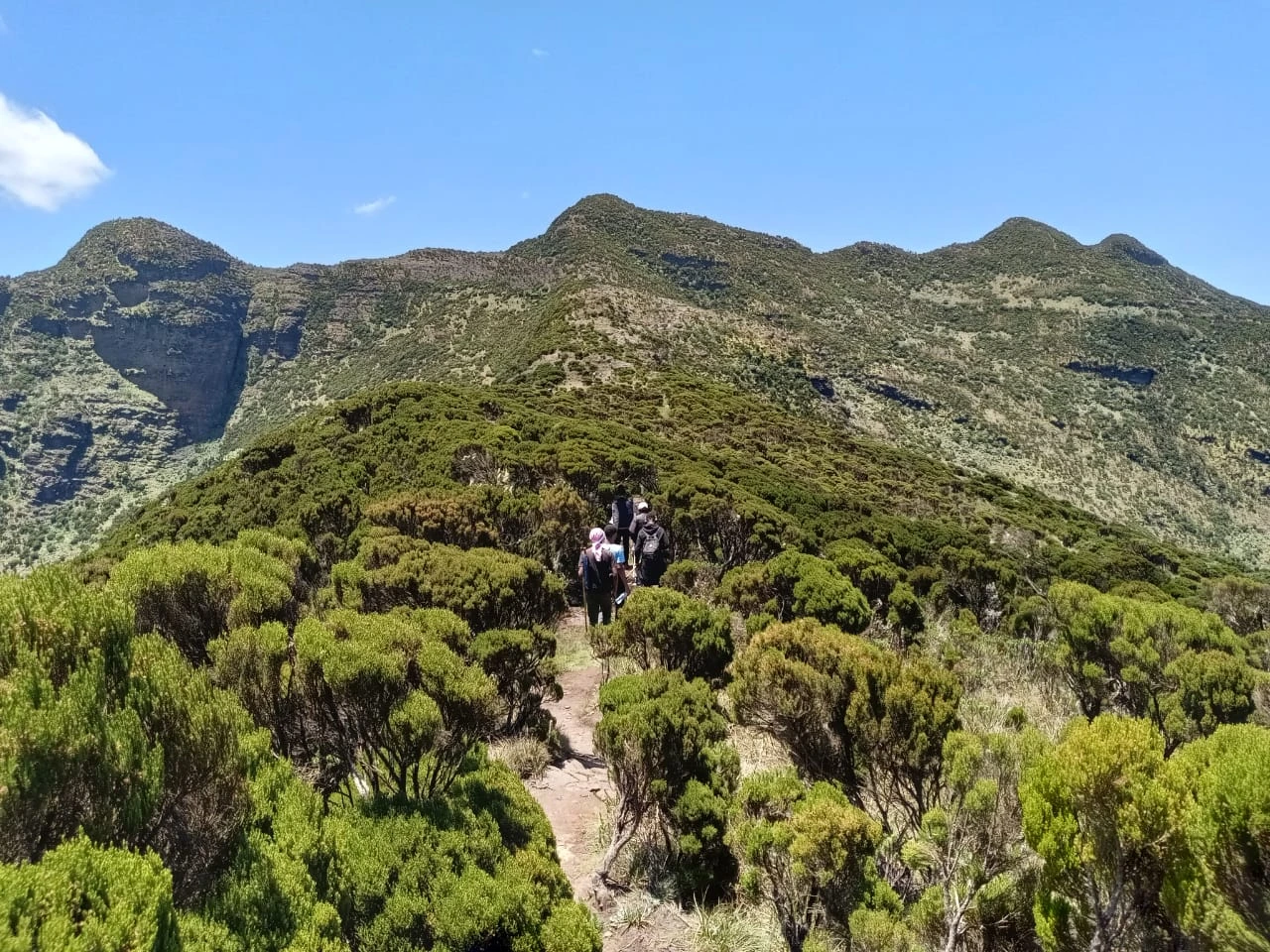
1. Start Early in the Morning
Most wildlife is active during the cooler early morning hours, which means better sightings and a more comfortable hike overall. At parks like Hell's Gate and Amboseli, gates typically open around 6:00 a.m., and arriving close to opening time lets you cover ground before the midday heat sets in. Starting early also gives your guide more daylight to work with if the group needs extra breaks, and it improves overall trail visibility and safety on rockier sections.
2. Invest in Proper Footwear
Good hiking boots with ankle support prevent injuries on the uneven, often volcanic terrain found around Hell's Gate and Mount Longonot. Break your boots in on shorter local walks before your trip — new boots on a full-day hike are one of the most common causes of blisters. Pair them with moisture-wicking socks, and pack a lightweight pair of camp shoes if you're staying overnight near the trailhead.
3. Bring Plenty of Water
Always carry enough water — 3 to 4 liters per day during a safari hike — and more if you're hiking at altitude, such as on the crater rim routes at Mount Longonot. A hydration bladder is easier to sip from on the move than stopping to unscrew a bottle, but it's worth carrying a backup bottle too, in case of leaks. If you're on a multi-day trip, ask your guide about safe refill points rather than relying on stream water.
4. Use Sun Protection
Kenya sits almost on the equator, and UV exposure is intense year-round, especially at elevation on exposed ridgelines. Use a broad-spectrum SPF 30+ sunscreen reapplied every couple of hours, a wide-brimmed hat, and UV400-rated sunglasses. Lightweight, long-sleeved clothing with a UPF rating adds protection without overheating you on longer routes.
5. Follow Your Guide's Instructions
Your guide understands wildlife behavior, weather patterns, and terrain far better than a first-time visitor can. In parks with dangerous game, guides (sometimes accompanied by an armed KWS ranger) know how to read animal warning signs and choose safe distances long before you would notice anything. Hiring an experienced local guide also supports community-based tourism and often means access to trails and viewpoints you wouldn't find on your own.
6. Pack Light but Smart
Carry only essentials: water, high-energy snacks (electrolyte tablets or trail mix work well), a compact first-aid kit, a light rain jacket, a headlamp, and a portable power bank. A dry bag or rain cover for your daypack is worth the small extra weight if you're hiking during the shoulder seasons. Keep your park permit and ID accessible, since rangers may ask to see them at checkpoints. See the full packing list below for everything else worth bringing.
7. Wear Neutral Colors
Earth tones like khaki, olive, and brown help you blend into the landscape and avoid startling animals, unlike bright colors or blues, which can also attract biting flies in some areas. One important note for visitors: camouflage-patterned clothing is legally restricted to Kenya's military and police, and it can be confiscated from civilians at park entrances, so leave it at home.
8. Know Your Limits
Choose hiking trails that match your fitness level and avoid overexertion, particularly at altitude. The crater rim trail on Mount Longonot climbs to roughly 2,776 meters, which can be strenuous for first-timers, while routes at Hell's Gate and the Ngong Hills are gentler introductions to safari hiking. Agree on a turnaround time with your guide before you start, and don't be afraid to say when you need a break.
9. Respect Wildlife Distance
Never approach animals, even ones that appear calm or distant — wild animals are unpredictable, and getting too close puts both you and them at risk. A pair of 8x42 binoculars lets you enjoy close-up views safely from a proper distance, and a zoom lens does the same job for photos. Always let your guide set the pace and distance around wildlife.
10. Practice Leave-No-Trace
Take all your trash with you and preserve Kenya's natural beauty for the hikers who come after you — plastic bags are banned nationwide, so avoid bringing them in the first place. Stay on marked trails to protect fragile vegetation, and be mindful around community farmland bordering conservation areas like Kijabe Hills. Responsible hiking directly supports local forest conservation efforts.
Ready for your safari hike? Chat with us on WhatsApp
Complete Safari Hiking Packing List
Use this checklist alongside tip #6 above to make sure nothing important gets left behind.
Clothing & Footwear
- Broken-in hiking boots with ankle support
- Moisture-wicking socks (bring a spare pair)
- Neutral-toned, breathable clothing (no camouflage)
- Wide-brimmed hat and UV400 sunglasses
- Light rain jacket or windbreaker
Hydration & Snacks
- 3–4 liters of water (hydration bladder plus a backup bottle)
- Electrolyte tablets or sachets
- High-energy snacks: trail mix, energy bars, fruit
Safety & Health
- Compact first-aid kit (plasters, antiseptic, blister pads)
- Broad-spectrum SPF 30+ sunscreen
- Insect repellent
- Headlamp or torch, plus spare batteries
- Any personal medication
Documents & Extras
- Park permit / entry ticket and ID
- Fully charged phone and a portable power bank
- Binoculars (8x42 recommended) and a camera
- Small dry bag or rain cover for your daypack
- Cash in small denominations for park fees and tips
Best Time of Year for a Safari Hike in Kenya
Kenya's two dry seasons — late June through October, and again in January and February — offer the clearest trails, easiest footing, and best wildlife visibility, since animals cluster near remaining water sources. The long rains from March to May and the short rains in November can turn volcanic soil trails, like those on Mount Longonot, muddy and slippery, and some routes may close temporarily. For a deeper seasonal breakdown by destination, see our guide to the best time to hike each mountain in Kenya.
How Much Does Safari Hiking Cost in Kenya?
Costs vary by park and whether you book independently or through a guided tour. As a rough guide, KWS-managed parks such as Hell's Gate, Amboseli, and Mount Longonot charge a daily non-resident entry fee, typically higher than resident rates. Community-managed trails around Kijabe Hills and the Ngong Hills usually charge a smaller flat conservation or guide fee instead of a per-park entry ticket.
On top of park fees, budget for a local guide (often required and always worthwhile), transport to the trailhead, and any gear you need to rent or buy. For a full breakdown of typical prices across our most popular trails, see our dedicated safari cost guide.
Staying Safe on a Safari Hike
Most safari hikes in Kenya are low-risk when you prepare properly and listen to your guide, but it's worth knowing what to do in a few common situations.
Wildlife encounters
If you unexpectedly come across large or potentially dangerous wildlife, stay calm, stay behind your guide, and never run — sudden movement can trigger a chase response in animals that would otherwise ignore you.
Weather and altitude
Afternoon showers are common even in the dry season, and temperatures drop quickly at altitude on routes like Mount Longonot's crater rim. Pack a light layer even on a sunny morning, and watch for signs of heat exhaustion or altitude discomfort — headache, nausea, or unusual fatigue — and tell your guide immediately if you notice them.
Hiking in a group
Stick together on the trail, agree on a turnaround time before you set out, and make sure at least one person in your group has a fully charged phone and the guide's contact details. For a more complete rundown of do's and don'ts, read our Kenya safety tips for hikers and travelers and our general safety guidance.
Frequently Asked Questions
Do I need a permit to go safari hiking in Kenya?
Yes. Most national parks and reserves, including Hell's Gate, Amboseli, and Mount Longonot, are managed by the Kenya Wildlife Service (KWS) and charge a daily entry fee. Community-managed areas like Kijabe Hills and Ngong Hills usually charge a smaller local conservation or guide fee instead. Rates change from time to time, so check current pricing — see our safari cost guide for typical figures.
Is it safe to hike without a guide in Kenya?
It depends on the location. Trails such as Hell's Gate allow self-guided walking on marked routes, but a local guide is strongly recommended anywhere wildlife is present, and mandatory in parks like Amboseli where dangerous animals roam freely. Guides also know the terrain, weather patterns, and cultural context, which makes the hike safer and more rewarding.
Which national park is best for a beginner safari hike?
Hell's Gate National Park and the Ngong Hills are ideal starting points because the trails are well marked, distances are manageable, and the elevation gain is gentle. Kijabe Hills is another beginner-friendly option close to Nairobi with shorter guided routes.
How much water should I carry on a safari hike?
Plan for 3 to 4 liters per person for a half-day hike, more if you are hiking at altitude or during the hotter dry-season months. A hydration bladder plus one backup bottle is a reliable combination for most beginner routes.
Can I wear camouflage clothing while hiking in Kenya?
No. Camouflage-patterned clothing is legally restricted to Kenya's military and police, and civilians, including tourists, can have it confiscated at entry points. Stick to earth-toned but clearly non-military colors such as khaki, olive, or brown.
What should I do if I feel unwell or overexerted on the trail?
Tell your guide immediately — don't push through it. Stop, hydrate, and rest in the shade if possible. Guides on established routes carry basic first-aid supplies and know the fastest way back to the trailhead if you need to turn around early. For more general safety guidance, see our Kenya safety tips for hikers.
How much does safari hiking cost in Kenya?
It depends on the park: KWS-managed parks charge a daily entry fee (higher for non-residents), while community-run trails around Kijabe Hills and the Ngong Hills typically charge a smaller flat fee. Add a guide fee and transport on top. See our safari cost guide for typical figures.
Is safari hiking dangerous?
Safari hiking is generally safe when you go with an experienced guide, stay on marked trails, and follow basic wildlife-distance rules. The main risks for beginners are sunburn, dehydration, and overexertion rather than animal encounters — all of which are easy to avoid with the preparation covered in this guide.
